
Samuel Westheimer
Values Codes: I – E – L
Samuel Westheimer (1833-1914) was born in Prussia and left in 1848, amid that year’s revolutionary uprisings, to travel to New York City to live with two brothers.
He then managed a manufacturing plant in upstate New York.
In 1859, Westheimer moved to St. Joseph, Missouri, the farthest western reach of American railroads, and a starting point for settlers heading west to Oregon by wagon train.
Westheimer became a grocery and liquor merchant in “St. Joe,” and successfully continued the business for decades.
In 1879, Samuel Westheimer won a seat on the St. Joseph city council and was re-elected in 1881 and 1883.
In 1882, the city found itself in a financial crisis: its treasury was bankrupt; it had defaulted on its bond debt; and it owed the then-enormous sum of $1,750,000.
With the mayor’s support, the council entrusted the city’s economic recovery to Samuel Westheimer.
They elected him council president and made him chairman of the council’s finance committee; they continued him in those positions in 1883.
By 1884, Westheimer had steered the city back to financial health and restored its credit.
In February 1884, the Democratic and Republican parties jointly offered Westheimer the mayoralty, but he declined and left the council in 1885.
At Westheimer’s passing in 1914, the council praised him as “a man who gave of his money and his time and his brain to make his hometown more progressive, more substantial and more prosperous.”
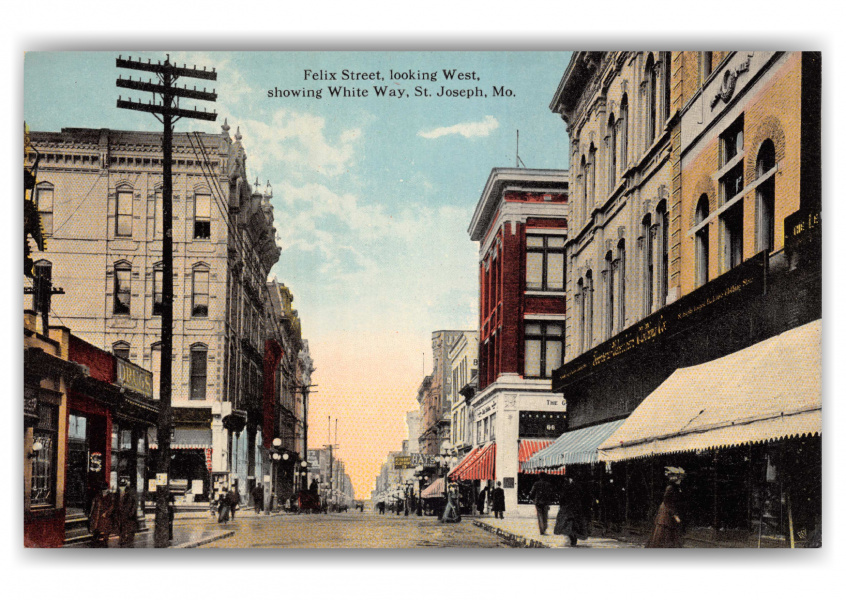
Source
- Mark Rutzik, Breaking New Ground: The Untold Story of Early America’s Jewish Electoral Pioneers – 1788 to 1920, 2025.
Mark Rutzick is the curator of this Samuel Westheimer exhibit.