William Leidesdorff
Values Codes I – E – P
William Leidesdorff (c. 1810-1848) was born in St. Croix, in the British Virgin Islands, to Anna Marie Sparks, a mixed-race Creole, and to William Leidesdorff, a Danish-born Jewish sugar planter and seaman.
The parents never married but they had four children together. In 1837, the older William formally adopted his children.
Before that, a wealthy English plantation owner in St. Croix had taken a liking to young William and became his surrogate father.
San Francisco and Sacramento
When the Englishman died a few years later, Leidesdorff inherited the Englishman’s wealth and used the inheritance to buy a schooner, the Julie Ann, which he sailed around Cape Horn in 1841 to the Mexican shoreline village of Yerba Buena on San Francisco Bay, where he settled.
Leidesdorff traded with the Hawaiian Islands, sold merchandise along the California coast, built his town’s first hotel, opened a retail merchandise store, and became a cattle rancher.
In 1844, he obtained Mexican citizenship and the Mexican government granted him a 35,000-acre land parcel near Sacramento, adjoining a 50,000-acre tract owned by a Swiss immigrant named John A. Sutter.
In 1845, Leidesdorff was appointed American vice-consul in the California Territory.
Yerba Buena renamed itself San Francisco in 1847 and held its first election that year. William Leidesdorff was elected city councilman, treasurer, and school board member.
Gold was discovered on John Sutter’s ranch in January 1848 and the California Gold Rush began. Sutter wrote to Leidesdorff, his neighbor, reporting that gold had been found on the Leidesdorff ranch.
In May 1848, William Leidesdorff contracted meningitis and died at thirty-eight.
Death and Legacy
Leidesdorff’s San Francisco real estate, businesses, and gold-laden Sacramento ranch created an estate exceeding one million dollars, leading recent commentators
to call Leidesdorff “America’s first black millionaire.”
Today, Leidesdorff Street runs through a four-block stretch of San Francisco’s financial district. In 2003, the California legislature renamed fifteen miles of California Highway 50 in Sacramento County as the William A. Leidesdorff Jr., Memorial Highway.
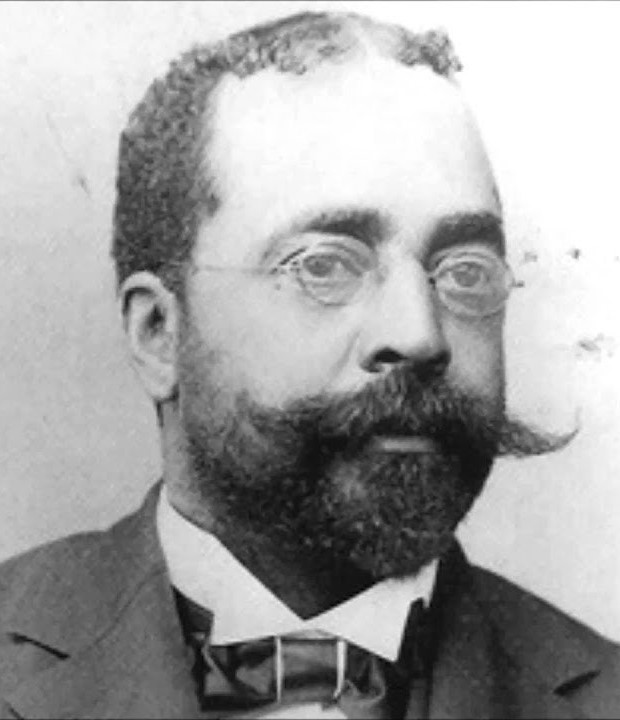
William Leidesdorff
Source
- Mark Rutzik, Breaking New Ground: The Untold Story of Early America’s Jewish Electoral Pioneers – 1788 to 1920, 2025.
Mark Rutzick is the curator of this William Leidesdorff exhibit.